Pattern Giveaway and MadMay discount

To celebrate the madness of Madelinetosh, as part of MadMay, I am offering a 30% discount on my latest pattern Grown-up Hira. Use coupon code MadMayHira when you check out on Ravelry. You need to add the pattern to cart and on the check out page, you can add this coupon code, which should reflect before you are redirected to Paypal.

How about getting a copy for free? You can try your luck at winning a copy of this pattern by posting on this thread.

New Pattern: Grown-up Hira

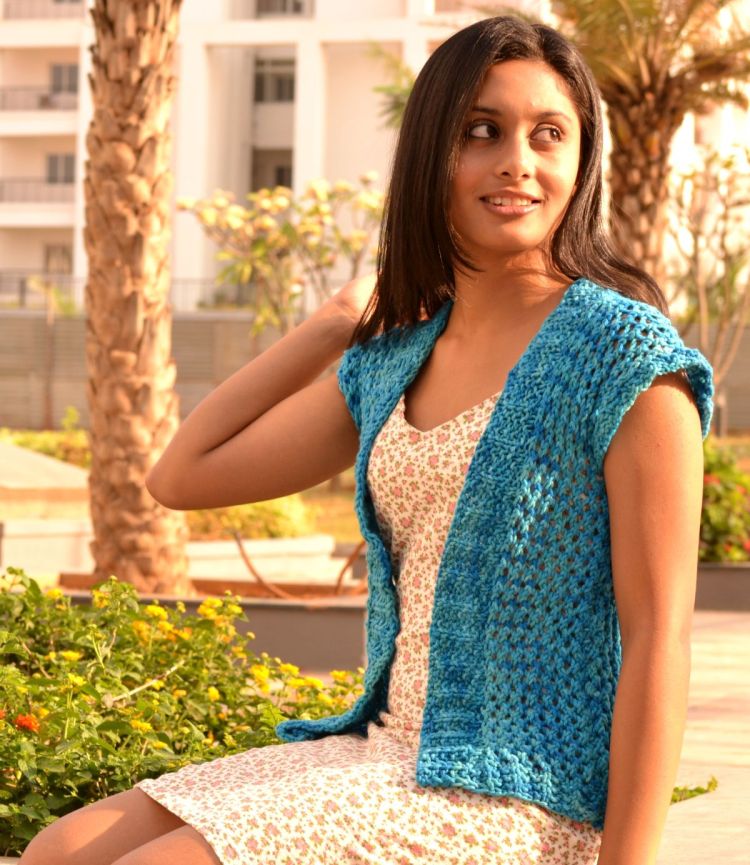
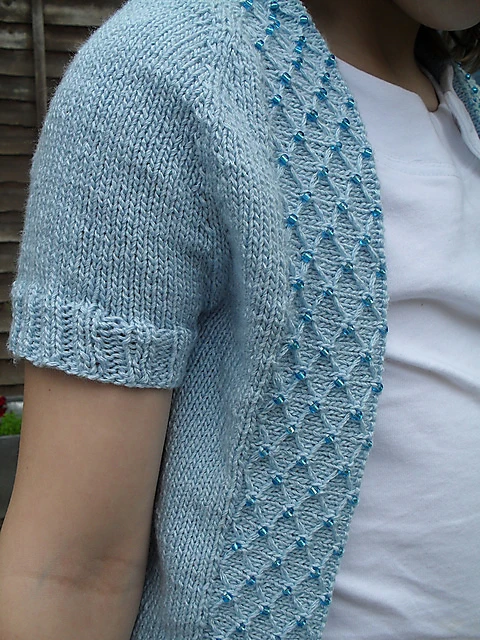
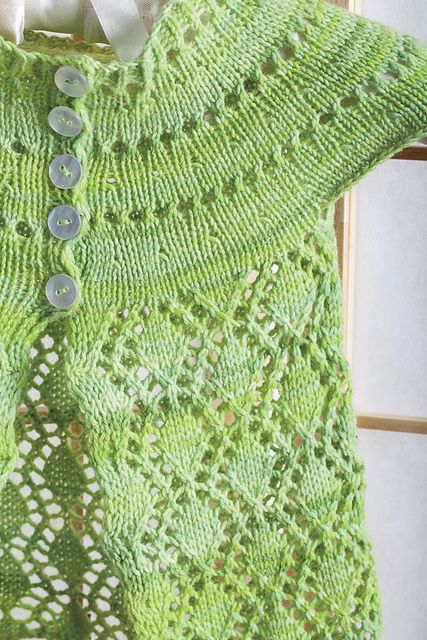
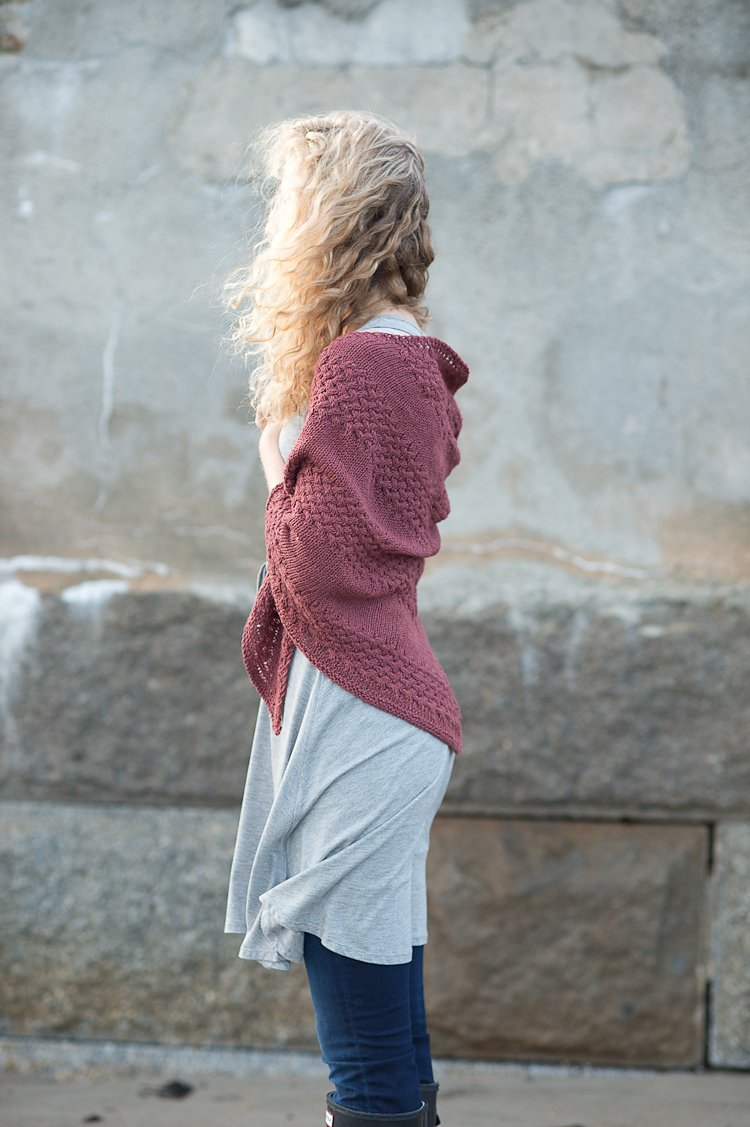
Hira is light and breezy and is great for layering on a cold summer evening. It can be worn over a pretty evening dress or make it casual by pairing with jeans and a tee. The beads on the collar and the sleeves jazz up the cardigan turning the simple cardigan into a special-occasion-wear. I just love the beads on the sleeves, if I say so myself.

Hira is knit from the top-down with raglan sleeves. After the body-sleeves split, the body is worked flat with waist shaping. Sleeves are knit in the round. Stitches for the collar are picked and worked flat, knit to the double the width with a garter ridge, over which the collar gets folded and sewn in place. Don’t worry, the sewing is on the wrong side, so not publicly visible at all.

Grown-up Hira is women’s version of Hira, so you can make a mother-daughter cardigan if you like.

Ravelry Pattern: Grown-up Hira by Anjali M.
Yarn Suggested: Madelinetosh Pashmina
Needle Size: US #6 4 mm for the body

New Pattern: Just Hatched Blanket

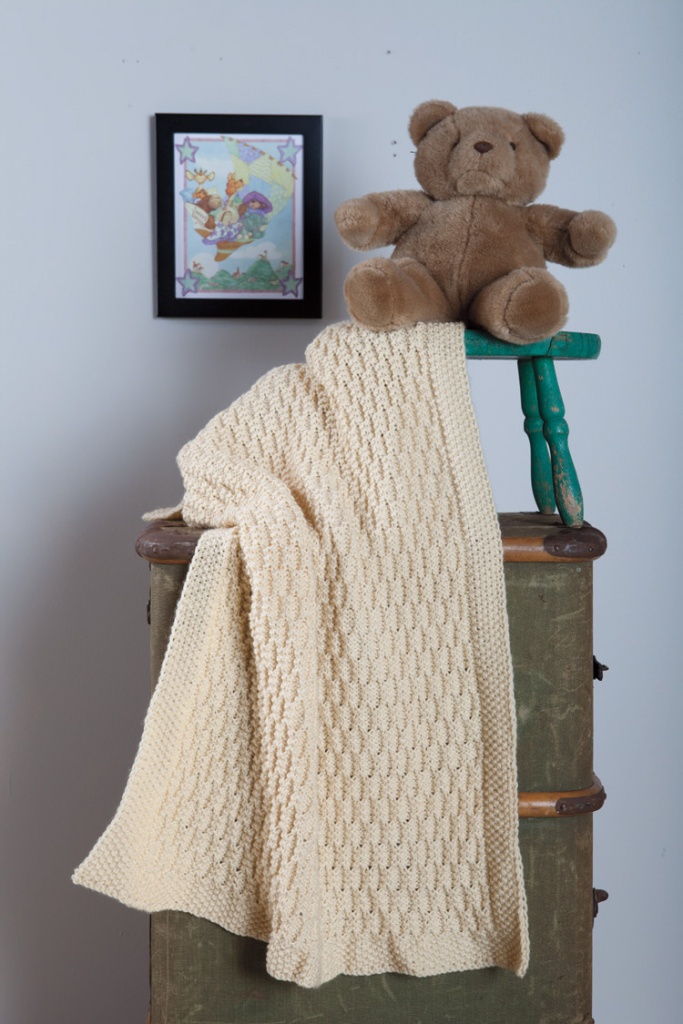
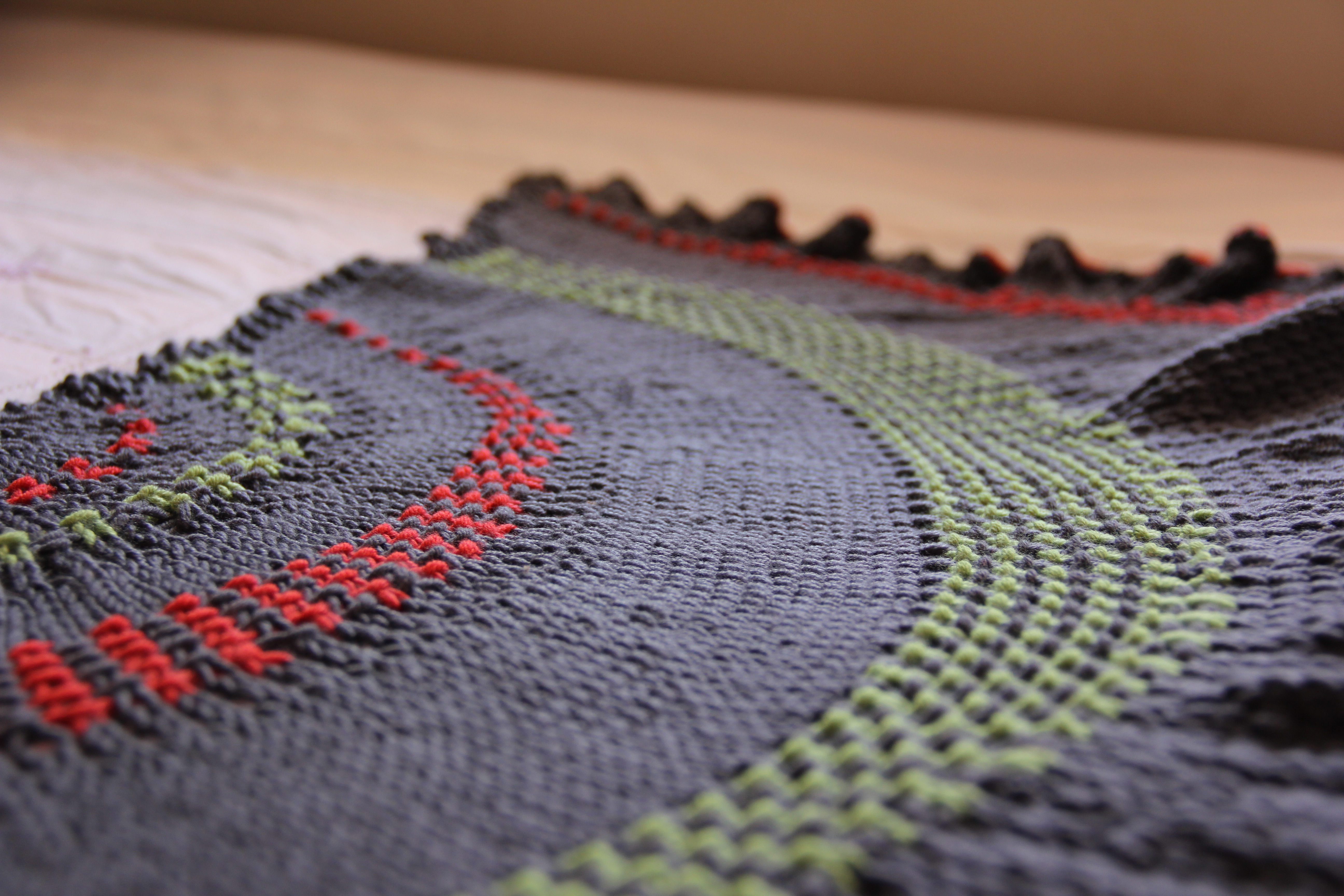
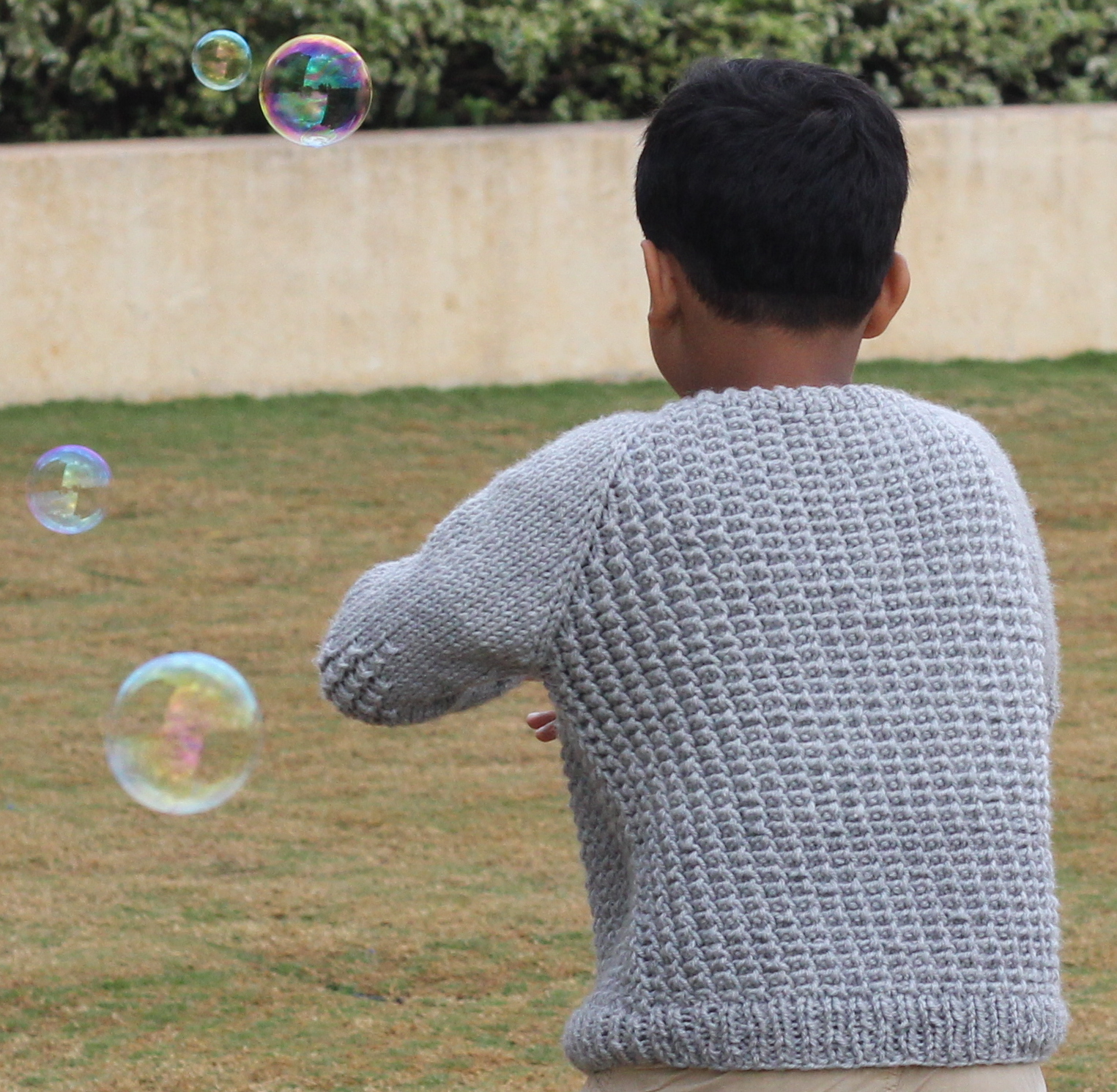
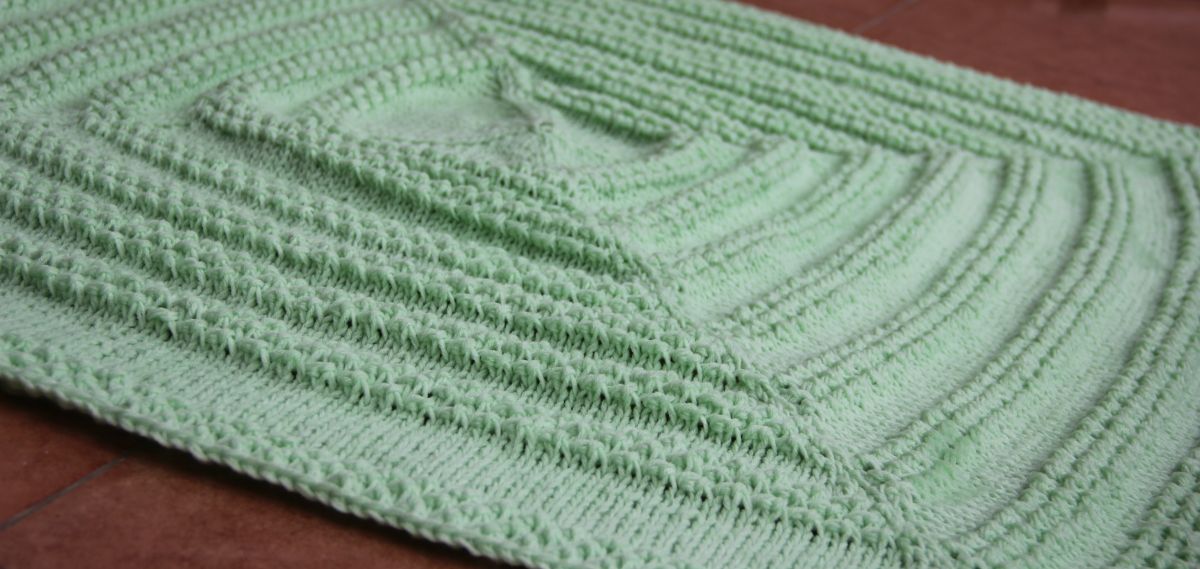
I used a simple, textured stitch pattern for Just Hatched Cardigan. I loved the simplicity of this stitch so much that I decided to use it in a blanket. I initially thought of using this as an all over stitch pattern, but I liked it better when I paired it with stockinette. The obvious choice was to have panels of stockinette and texture, but I wanted something different.  Then I zeroed in on making this a center-out blanket with alternate panels of stockinette and texture.

The pattern is written for sport, DK, worsted and Aran weight yarn. The pattern recommends needle  sizes for all yarn weights, but you can use any needle size which gives you the fabric you like. Center-out knitting means you can customize the size easily

Ravelry Pattern: Just Hatched Blanket
Yarn Suggested: Knit Picks Brava Worsted in Canary
Needle Size: US #6 4 mm


Review: Craftsy Class Fit Your Knits

I am a big fan of Craftsy’s online classes. I have picked up a new skill or two like quilting and sewing, but what I really looked forward to was picking up new techniques in knitting. As a sweater knitter, I was always afraid of knitting a sweater that won’t fit me. Even though most patterns come with helpful photos to judge the fit, I was always wary since bodies come in all different shapes and sizes. As a newbie pattern creator, I am even more terrified of putting something out for sale and knitters not being happy with it.

When Craftsy announced its new class Knit Lab Fit Your Knits, I knew I had to take it, irrespective of which side of the table I was sitting on, knitter or designer. My expectation from the class was pretty simple. As a knitter, I wanted to know how I can modify a pattern to suit my body and as a designer, I wanted to know what all information I need to include in my patterns so that a knitter can easily modify my pattern to suit her taste.

Image courtesy: Craftsy

Image courtesy: Craftsy

Knit Lab Fit Your Knits is series of classes by Stefanie Japel. Stefanie starts off with giving reasons why a knitter would want to modify a pattern. She then proceeds to tell us what are the important body measurements needed to make a sweater. The part where she measures the mannequin so that we know what exactly is bust, waist and high hip measurement is something I found very helpful. I did get bored in the next section (Real Women Have Curves) where she measures herself and her friend, I found this long drawn (26 minutes, eep!) and I wished it was edited out to make it shorter.

Stefanie has devoted a whole episode to modifying sleeves. She goes into all the little details about the gauge, wrist measurement and the armhole measurement. She covers one of the most complicated calculation in knitting: rate of decrease/increase. This lesson will apply to any kind of sleeves, top down or bottom up since the calculation can be easily mimicked for the other kind of sleeve. I was hoping she covers sleeve cap shaping, but that was too much to hope for as Stefanie herself admits, this is a complex topic which cannot be covered in this class. I hope Craftsy ropes in a designer to cover this topic of top down sleeves: sleeve cap shaping. Craftsy, are your listening?

Stefanie chooses two of her own patterns Money Penny and Mesilla and goes into all the details of modifying these patterns according to your bust and waist measurements. After the class on sleeve shaping, this was easy to follow.

As a bonus, Stefanie offers two episodes: bust darts and armholes. I knew what bust darts are, but have never knitted them. Steafnie’s detailed description makes it so easy to visualize how a bust dart is knitted into the sweater. This class is generic (not tied to any pattern), so I can apply this to any sweater I am knitting, top down or bottom up.

In the end, I am very happy to say I got exactly what I was expecting from the class and much more (read bust darts). Stefanie tries to keep the discussion as neutral as possible when it comes to construction, but since the patterns she chose happen to be top-down, the calculations happen to be for a top-down sweater. But, with this calculation as a guide, I am sure we can apply the same logic to any bottom-up sweater.

So, whether you are a designer or a sweater knitter who worries about how the sweater will fit you, this class will be a treasure trove of information. Craftsy is offering a 50% discount on this class for my blog readers. If you wanted to sign up for Craftsy’s Knit Lab Fit Your Knits class, and haven’t yet, then do it right away.

Giveaway Winners

Thanks for all the wonderful suggestions. I had a hard time picking a name, but when I was googling the suggested names, I stumbled upon the word ‘Dyvest’, which is a take on ‘divest’, but with a Y to denote the Y’s in the cable. So, Dyvest is live.

I ended up with this name after reading the suggestions of staceyknitsit, so we have our first winner. Congratulations Stacey.

And the random generator has shined upon Amanda Kate. Congratulations Amanda!

Stacey and Amanda, please let me know your Ravelry IDs or email IDs so that I can send the pattern.

Thanks for playing everybody. I am giving a copy of this pattern on my group. If you want another go at winning this, please head over to the thread, but hurry because the giveaway will end tomorrow, Jan 26th.

New Pattern: Dyvest

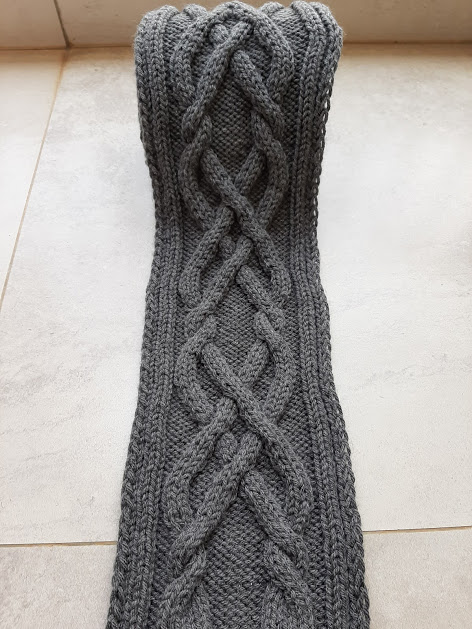
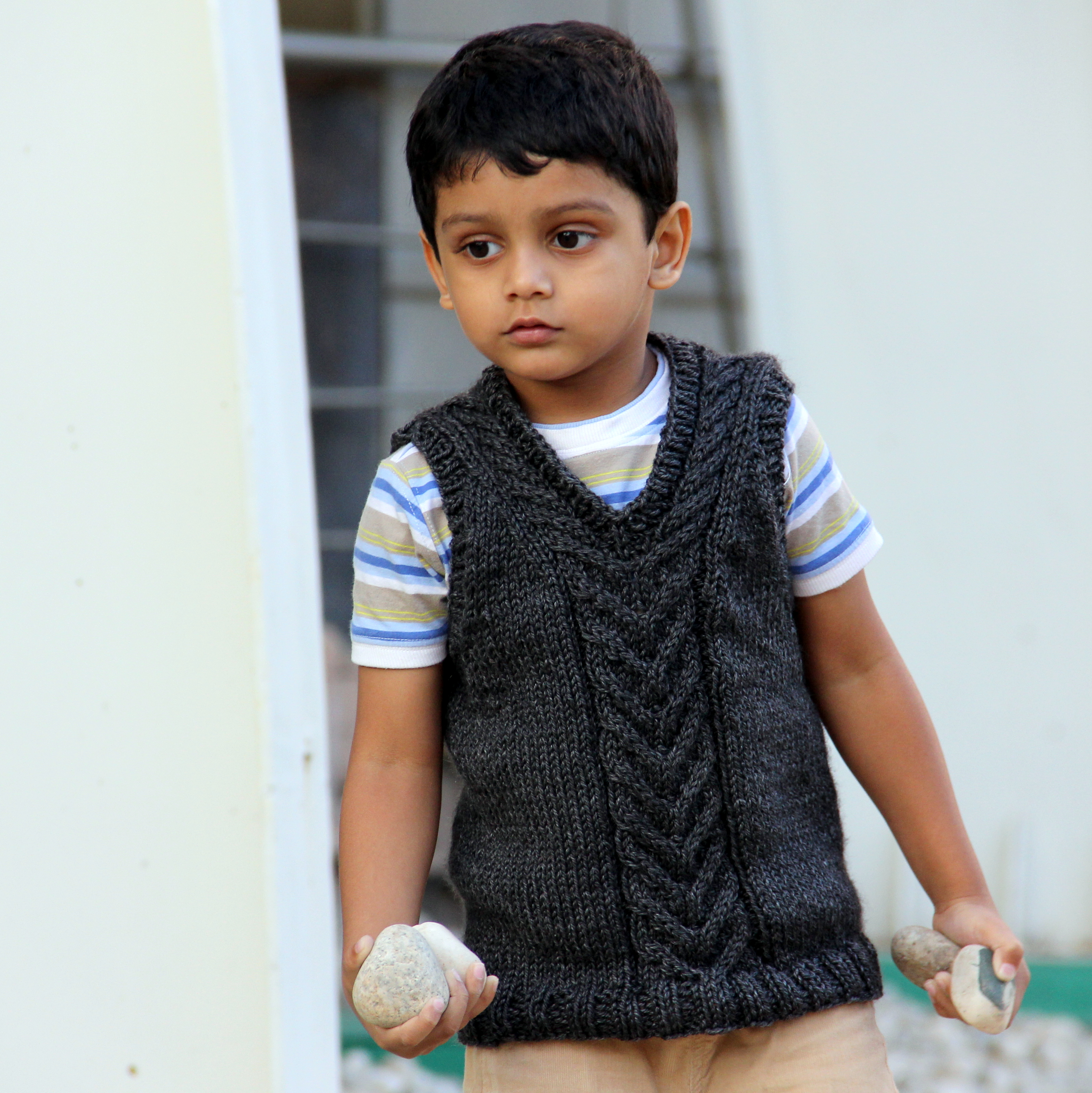
Dyvest is a unisex vest with an attractive cable stitch pattern down the front. The Y-shaped staghorn cable divides into a similar half-staghorn stitch on either side of the V-neck, hence the name Dyvest.

Ravelry Pattern: Dyvest by Anjali M.
Yarn Suggested: Bessie May Nettle in Coal colorway
[Aran/10 Ply; 70% Wool; 30% Plant Fiber; 87 yards/50 gms]
Needle Size: US #6 4 mm

The staghorn and half-staghorn are simple to knit with just 3 rows of cable and plain wrong side rows. Both cables are charted and written instructions are also provided.


The vest is knit bottom-up in round  until the armholes and then the fronts and back are knit flat. The shoulders are joined using three needle bind-off. Armbands and neckbands are knit after picking up stitches.

Gauge:
16 sts x 22 rows = 4″ in Stockinette Stitch
20 sts x 20 rows = 3.5″ in Staghorn Cable stitch pattern

Sizing:
Finished Chest Measurement:
17.5 [19.5, 21.5, 23.5] [25.5, 27.5, 29.5] inches
Vest is intended to be worn with 1-2″ of positive ease.

I knit the prototype using Bessie May Nettle, which is a blend of wool and plant fiber. This is the first time I worked with a plant fiber and I was blown away by the stitch definition – the cables are neat and crisp. I had to work on the fronts a dozen times, so I can vouch for ‘froggability’ of the yarn too, boys is it sturdy. With the main color as dark grey and the light grey heather, Coal colorway is an excellent choice for men’s and boys’ knits.

New Pattern: Entropy Vest

I am so excited that my Entropy Vest is published as part of Petite Purls Issue 14.  I have always admired the patterns published in Petite Purls, so I am very happy to have a pattern of mine published by them.

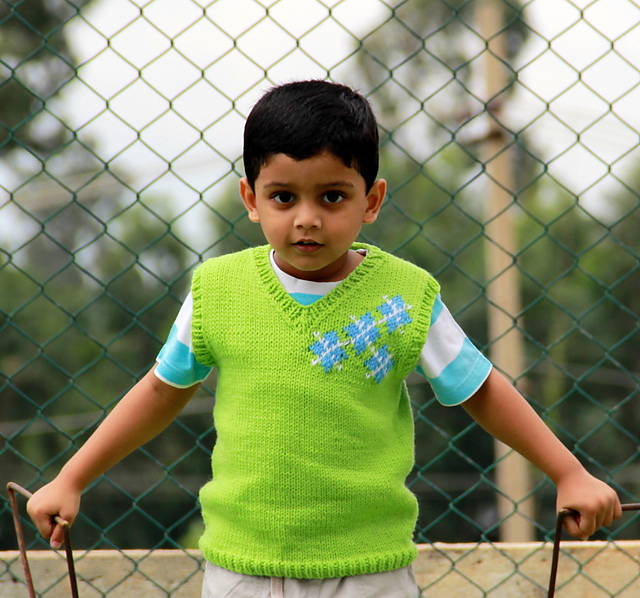
Entropy Vest is a take on the classic argyle vest. With its off-center argyle motifs, the vest tries to bring in a disorder in the otherwise ordered universe, hence the name Entropy. The vest is knit bottom-up in the round until the armholes, and the fronts and backs are worked flat separately. The argyle work is just 20 rows, so this is ideal for a beginner colorwork knitter.

Sizes: 4 [6, 8, 10, 12] years
Chest sizes:  23½[25, 26½, 28, 29½] inches

Ravelry Pattern: Entropy Vest
Yarn Suggested: Cascade 220 (Worsted)
Needle Size: US #5 3.75 mm for the body